
An excellent resource explaining the entire ISO 9001:2015 standard in power point presentation (94 slides) with detailed tutor notes.
This presentation will enable you and your team to understand the requirements of the standard in detail along with providing you information on how to implement these requirements in your organization.
After going through this presentation you shall be able to:
a) Understand the requirements
b) Appreciate the intent & purpose of these requirements
c) Know how to implement these requirements
d) Train yourself or others on these requirements
e) Make significant improvements in your organizational systems
The presentation of 94 slides provides an in-depth understanding of the various requirements of this ISO standard using the following:
a) Bullet point summary of the requirements in ppt slides
b) Detailed explanation of requirements with examples & cases in the notes portion of the slides
c) Engaging graphics & pictures to bring home the various concepts of the standard
The presentation has been prepared by our highly qualified, trained and experienced quality professional & Lead Auditor (ISO 9001:2015) with over 30 years of experience in training, consulting, auditing & certification of ISO standards.
The detailed notes are not visible in the preview of the document, but the same will be available on your purchase.
The presentation consists of the following contents:
Title page
ISO 9001:2015
Overview of standard
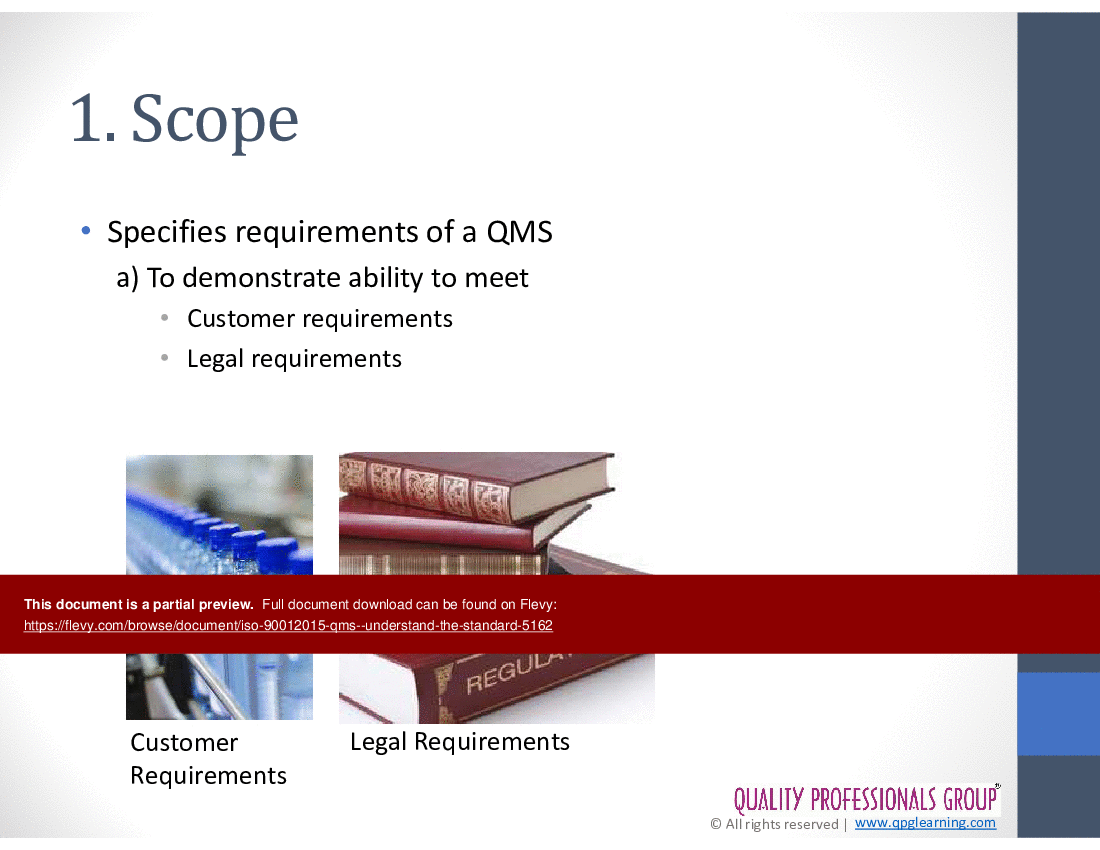
Scope
Scope (Contd.)
Normative References
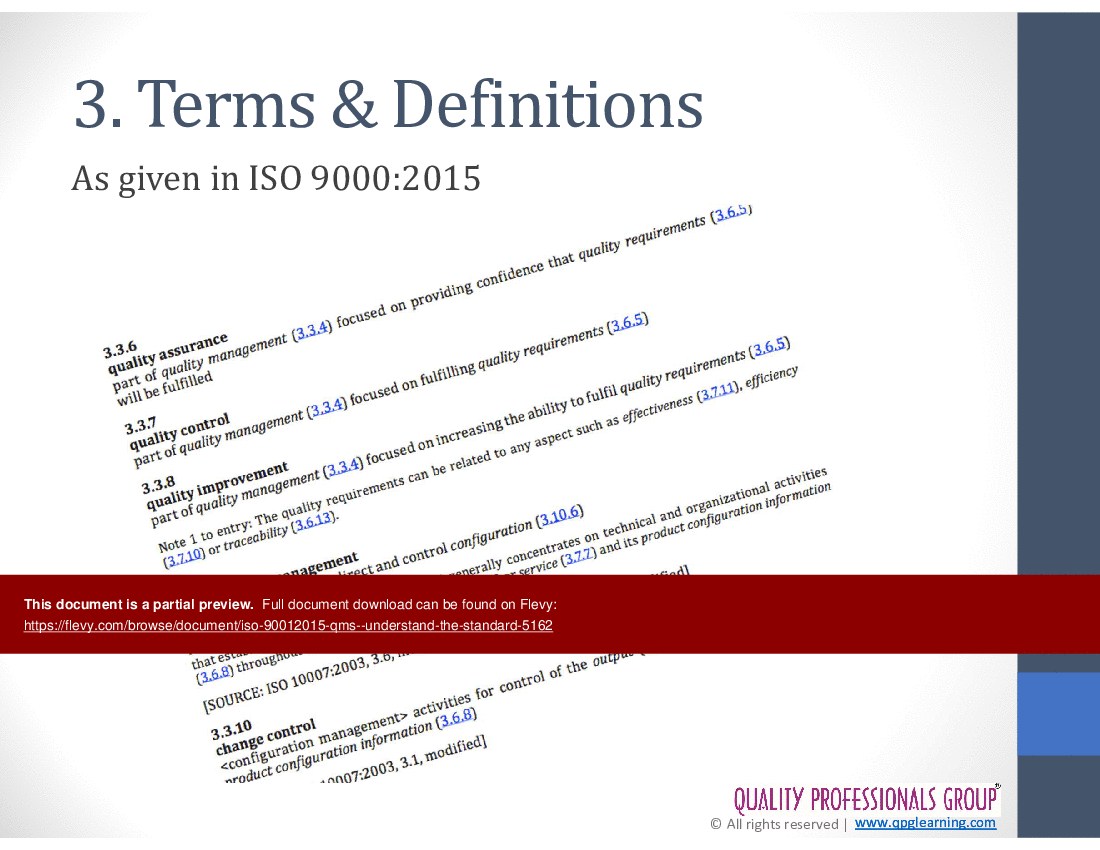
terms & definitions
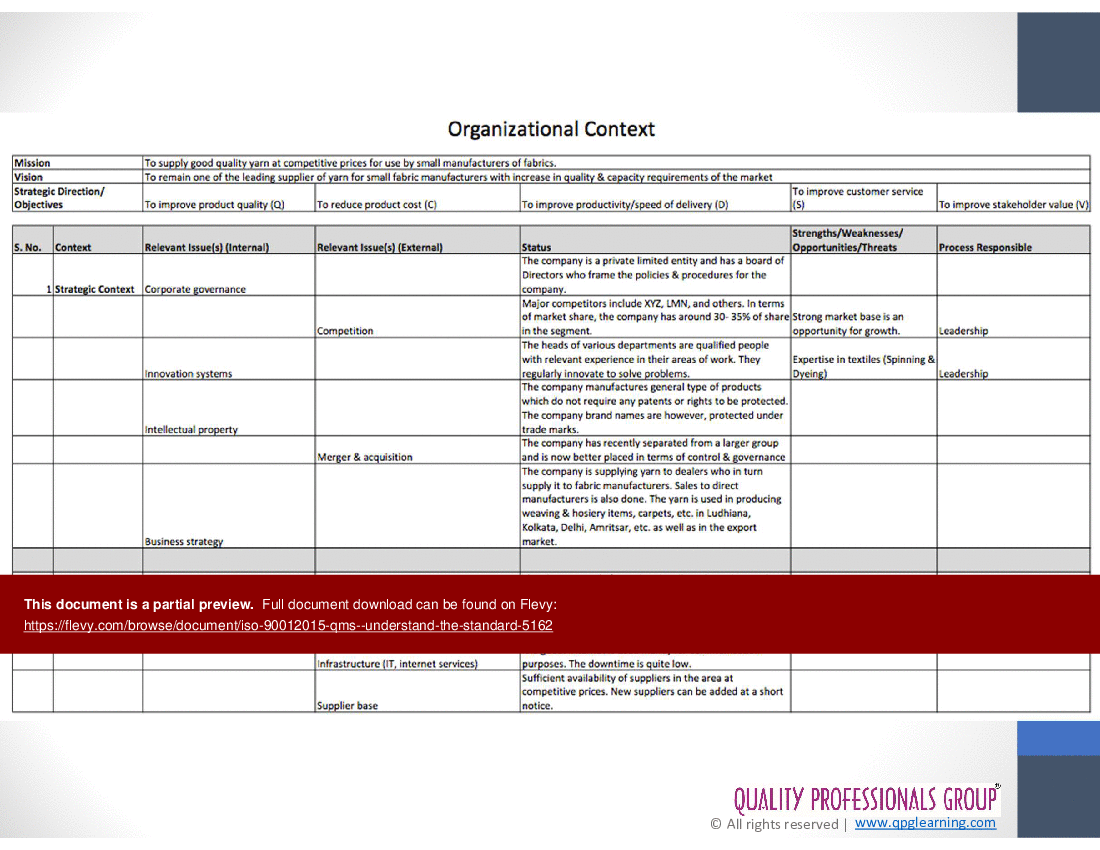
Context of the organization
Understanding the organization & its context
Organizational context (an example)
Understanding the needs & expectations of interested parties
Interested party needs (an example)
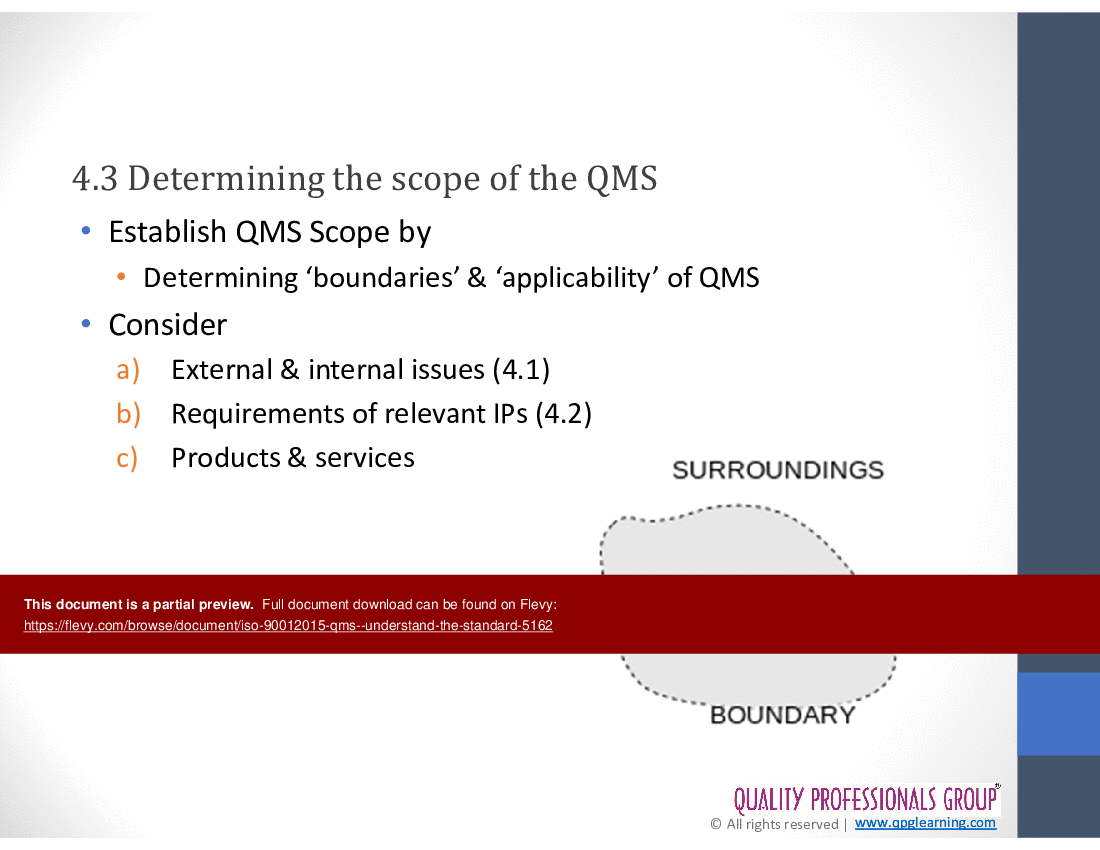
Determining the scope of the QMS
Determining the scope of the QMS (Contd.)
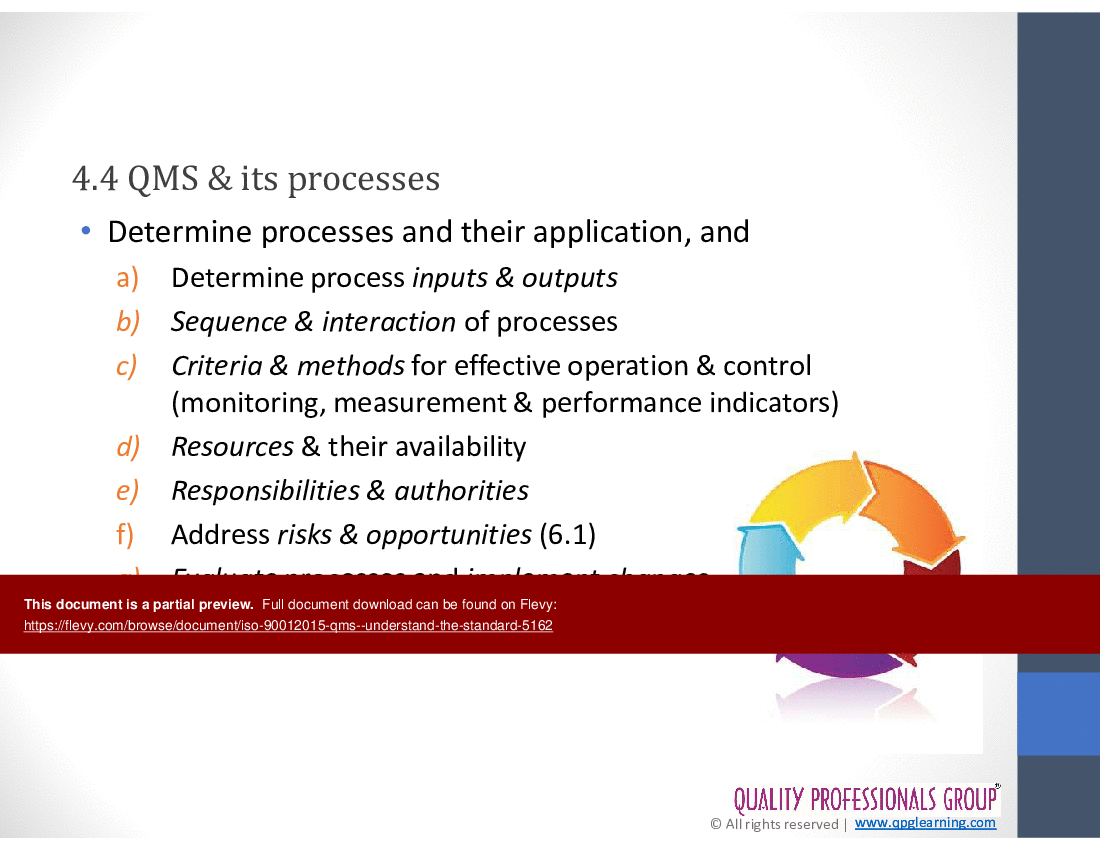
QMS and its processes
QMS and its processes (Contd.)
Leadership
Leadership & commitment
Leadership & commitment (Contd.)
Customer focus
Policy
Policy (Contd.)
Organizational roles, responsibilities & authorities
Organizational roles, responsibilities & authorities (Contd.)
Planning
Actions to address risks & opportunities
QMS risk register (an example)
Plan
Quality objectives and planning to achieve them
Quality objectives and planning to achieve them (Contd.)
Planning to include
Planning of changes
Support
Resources
People
Infrastructure
Environment for operation of processes
Monitoring & measurement resources
Monitoring & measurement resources (Contd.)
Organizational knowledge
Competence
Awareness
Communication
Documented information
Documented information (Contd.)
Operation
Operational planning & control
Operational planning & control (Contd.)
Requirements for products & services -customer communication
Determining requirements for products & services
Review of requirements for products & services
Review of requirements for products & services (Contd.)
Changes to requirements for products & services
Design & development of products & services -General
Design & development planning
Design & development planning (Contd.)
Design & development inputs
Design & development controls
Design & development controls (Contd.)
Design & development outputs
Design & development changes
Control of externally provided processes, products & services
Control of externally provided processes, products & services (Contd.)
Type & extent of control
Information for external providers
Production & service provision
Production & service provision (Contd.)
Identification & traceability
Property belonging to customers or external providers
Preservation
Post-delivery activities
Control of changes
Release of products & services
Control of nonconforming outputs
Control of nonconforming outputs (Contd.)
Performance evaluation
Monitoring, measurement, analysis and evaluation
Customer Satisfaction
Analysis & evaluation
Internal audit
Internal audit (Contd.)
Management review
Management review inputs
Management review outputs
Improvement
Improvement ? General
Nonconformity & corrective action
Nonconformity & corrective action (Contd.)
Improvement
The presentation includes practical examples and case studies to illustrate key concepts. It also covers essential topics like leadership, risk management, and customer satisfaction.
Got a question about the product? Email us at support@flevy.com or ask the author directly by using the "Ask the Author a Question" form. If you cannot view the preview above this document description, go here to view the large preview instead.
Executive Summary
This presentation on ISO 9001:2015 Quality Management Systems (QMS) provides a detailed overview of the standard's requirements, designed to enhance customer satisfaction and ensure compliance with legal obligations. Spanning 94 slides, it offers practical insights into implementing a QMS, including the necessary processes, leadership commitments, and performance evaluations. Users will gain a clear understanding of how to establish, maintain, and continually improve their QMS, ensuring alignment with organizational goals and customer expectations.
Who This Is For and When to Use
• Quality Managers and QMS Coordinators responsible for implementing ISO standards.
• Corporate Executives seeking to understand the implications of ISO 9001:2015 on their organization.
• Compliance Officers ensuring adherence to legal and regulatory requirements.
• Consultants advising organizations on quality management practices.
Best-fit moments to use this deck:
• During QMS training sessions for new employees or stakeholders.
• As a reference during internal audits or management reviews.
• When developing or revising quality policies and objectives.
Learning Objectives
• Define the key requirements of ISO 9001:2015 and their relevance to organizational success.
• Establish a robust QMS that meets customer and legal requirements.
• Implement effective processes for monitoring and measuring QMS performance.
• Enhance customer satisfaction through continuous improvement initiatives.
• Identify and address risks and opportunities within the QMS framework.
• Communicate the importance of quality management across the organization.
Table of Contents
• Overview of Standard (page 3)
• Scope of QMS (page 5)
• Normative References (page 7)
• Context of the Organization (page 8)
• Leadership and Commitment (page 12)
• Planning Actions for Risks and Opportunities (page 20)
• Support Resources (page 25)
• Operation Planning and Control (page 30)
• Performance Evaluation (page 40)
• Improvement Processes (page 50)
Primary Topics Covered
• Scope of QMS - Defines the requirements for demonstrating the ability to meet customer and legal requirements, enhancing customer satisfaction through effective processes.
• Context of the Organization - Focuses on understanding internal and external issues affecting the QMS and identifying interested parties and their requirements.
• Leadership and Commitment - Emphasizes the role of leadership in ensuring the effectiveness of the QMS and promoting a culture of quality.
• Planning for Risks and Opportunities - Details the need for identifying risks and opportunities that could impact QMS results and how to address them.
• Support Resources - Discusses the necessary resources, including infrastructure, personnel, and organizational knowledge, required for effective QMS implementation.
• Performance Evaluation - Outlines methods for monitoring, measuring, and evaluating the performance of the QMS to ensure continual improvement.
Deliverables, Templates, and Tools
• QMS implementation plan template for establishing processes and responsibilities.
• Risk assessment matrix for identifying and evaluating potential risks and opportunities.
• Quality policy and objectives framework to guide organizational quality initiatives.
• Internal audit checklist for assessing QMS compliance and effectiveness.
• Management review agenda template for structured evaluation of QMS performance.
Slide Highlights
• Overview of ISO 9001:2015 with a clear graphical representation of the standard's structure.
• Detailed breakdown of the scope of QMS, emphasizing customer satisfaction and legal compliance.
• Visual aids illustrating the context of the organization and its relevance to QMS.
• Leadership commitment slide showcasing the importance of top management involvement in QMS.
• Planning section highlighting the actions required to address risks and opportunities effectively.
Potential Workshop Agenda
Introduction to ISO 9001:2015 (30 minutes)
• Overview of the standard and its significance.
• Discussion on the benefits of implementing a QMS.
Understanding the Context of the Organization (60 minutes)
• Identify internal and external issues affecting the QMS.
• Determine the needs and expectations of interested parties.
Leadership and Commitment Workshop (45 minutes)
• Engage leadership in discussions on their role in QMS.
• Develop a quality policy aligned with organizational objectives.
Customization Guidance
• Tailor the QMS scope to reflect specific organizational boundaries and applicability.
• Adjust the quality policy to align with the organization's strategic direction and context.
• Incorporate specific risks and opportunities relevant to the organization's operational environment.
Secondary Topics Covered
• Documentation requirements for QMS processes.
• Communication strategies for internal and external stakeholders.
• Methods for managing nonconformities and corrective actions.
• Continuous improvement practices within the QMS framework.Document FAQ
What is ISO 9001:2015?
ISO 9001:2015 is an international standard that specifies requirements for a quality management system (QMS) to enhance customer satisfaction and ensure compliance with legal requirements.
How can I implement a QMS in my organization?
Implementing a QMS involves defining the scope, establishing quality policies, identifying processes, and ensuring leadership commitment to quality management.
What are the benefits of achieving ISO 9001:2015 certification?
Certification can lead to improved customer satisfaction, enhanced operational efficiency, and a stronger competitive position in the market.
How often should we conduct internal audits?
Internal audits should be conducted at planned intervals to assess the conformity and effectiveness of the QMS.
What is the role of leadership in QMS?
Leadership is responsible for demonstrating commitment to the QMS, ensuring resources are available, and promoting a culture of quality within the organization.
How do we measure customer satisfaction?
Customer satisfaction can be measured through surveys, feedback mechanisms, and monitoring customer complaints and compliments.
What actions should be taken for nonconformities?
Nonconformities should be identified, controlled, and corrected, with documented information retained to track actions taken.
How can we ensure continual improvement in our QMS?
Continual improvement can be achieved by regularly reviewing performance data, conducting management reviews, and implementing corrective actions as needed.
Glossary
• QMS - Quality Management System, a structured system for managing and improving quality.
• Nonconformity - A failure to meet a specified requirement.
• Internal Audit - A systematic examination of a QMS to determine its effectiveness.
• Customer Satisfaction - The degree to which customer needs and expectations are met.
• Leadership Commitment - The active involvement and support of top management in the QMS.
• Risk Assessment - The process of identifying and evaluating risks that could impact the QMS.
• Continuous Improvement - Ongoing efforts to enhance products, services, or processes.
• Quality Policy - A formal statement of an organization's commitment to quality.
• Interested Parties - Individuals or groups that have an interest in the organization's performance.
• Performance Evaluation - The process of assessing the effectiveness of the QMS.
• Corrective Action - Steps taken to eliminate the causes of nonconformities.
• Documentation - Recorded information required to support the QMS.
• Management Review - A formal evaluation of the QMS by top management.
• Stakeholders - Individuals or groups with a vested interest in the organization's success.
• Legal Requirements - Obligations imposed by law that the organization must comply with.
• Process Approach - A method of managing activities as interconnected processes.
• Customer Feedback - Information provided by customers regarding their satisfaction with products or services.
• Quality Objectives - Specific goals related to quality that an organization aims to achieve.
• Monitoring and Measurement - The process of tracking performance and compliance with QMS requirements.
• Statutory Requirements - Legal obligations that organizations must adhere to.
Source: Best Practices in ISO 9001 PowerPoint Slides: ISO 9001:2015 (QMS) - Understand the Standard (with notes) PowerPoint (PPTX) Presentation Slide Deck, Quality Professionals Group
This document is available as part of the following discounted bundle(s):
Save %!
ISO 9001:2018 QMS Auditor Course
This bundle contains 3 total documents. See all the documents to the right.
|
Receive our FREE presentation on Operational Excellence
This 50-slide presentation provides a high-level introduction to the 4 Building Blocks of Operational Excellence. Achieving OpEx requires the implementation of a Business Execution System that integrates these 4 building blocks. |










